How to Write a Professional Summary That Gets Noticed
Your resume summary is your elevator pitch. Stop using generic objectives and learn the 3-part formula to hook recruiters instantly.
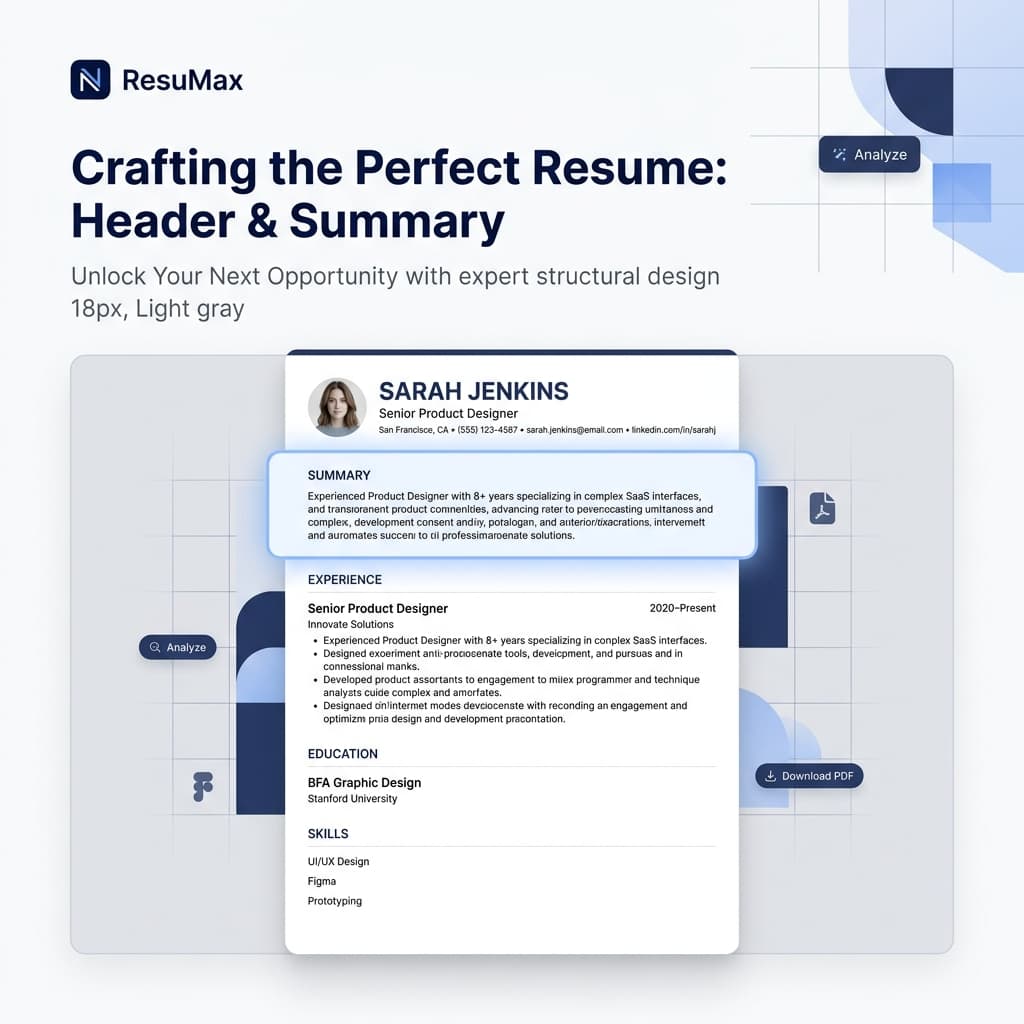
Let's get straight to the point: recruiters spend an average of 6 to 7 seconds scanning a resume before deciding its fate. The very first thing they look at? Your professional summary. Sitting right at the top of the page, this short paragraph is your elevator pitch. It’s your one shot to grab their attention and prove you're worth their time.
The Death of the "Resume Objective"
If your resume starts with something like, "Seeking a challenging role in a dynamic company to grow my skills," you need to delete it right now. That is a Resume Objective, and it's a relic of the past.
Here is the harsh truth: employers don't really care what you want. They care about what you can do for them. A Professional Summary flips the script. Instead of stating your demands, it acts as a highlight reel of your career, instantly showcasing your biggest achievements, core skills, and the unique value you bring to the table.
The 3-Part Formula for a Winning Summary
Writing a summary doesn't have to be hard. In fact, the best summaries all follow a very specific, proven formula. Just plug in your details into these three parts:
1. The Hook (Who you are)
Start strong. Use a powerful adjective, state your exact job title, and mention your years of experience. Don't beat around the bush.
Example: "Results-driven Digital Marketing Manager with 6+ years of experience..."
2. The Value (What you do best)
Next, highlight your core expertise. What are you actually doing day-to-day? This is also the perfect place to naturally inject industry-specific keywords so you pass the ATS (Applicant Tracking Systems).
Example: "...specializing in B2B SEO, paid acquisition scaling, and data-driven content strategy."
3. The Proof (Your biggest win)
Don't just say you're great; prove it. End with a quantified achievement. Numbers draw the eye and build instant credibility.
Example: "Proven track record of scaling organic traffic by 150% in under 12 months and managing $500k ad budgets with a 3x ROI."
Real-World Examples by Profession
Seeing is believing. Here are several highly effective professional summaries tailored for different career stages and industries. Feel free to use these as templates!
For Software Engineers & Tech
"Solutions-oriented Full Stack Developer with 5+ years of experience building scalable web applications using React, Node.js, and AWS. Expert in microservices architecture and optimizing database performance. Recently led a team of 4 engineers to migrate a monolithic legacy system, reducing server costs by 30% and improving load times by 2 seconds."
For Healthcare Professionals (Nurses)
"Compassionate Registered Nurse (RN) with 8 years of clinical experience in high-volume emergency departments and ICU settings. BLS and ACLS certified with a deep expertise in critical patient assessment and rapid triage. Recognized for maintaining a 98% patient satisfaction score while managing a fast-paced 12-bed trauma unit."
For Sales & Marketing
"Dynamic Enterprise Account Executive with a 7-year track record of crushing B2B SaaS sales quotas. Expert in complex consultative selling, pipeline generation, and enterprise contract negotiations. Consistently ranked in the top 5% of performers globally, generating over $2.4M in new ARR in the previous fiscal year."
For Recent Graduates (Entry-Level)
"Highly motivated Finance graduate (3.8 GPA) with a strong foundation in corporate accounting, financial modeling, and data analytics. Completed a rigorous 6-month internship at Deloitte where I assisted in auditing Fortune 500 tech companies. Eager to leverage my advanced Excel skills and attention to detail as a Junior Financial Analyst."
For Career Changers
"Dedicated customer success professional transitioning into Human Resources. Brings 5 years of experience in conflict resolution, client onboarding, and team training. Highly skilled in active listening, empathetic problem-solving, and managing complex stakeholder relationships. Passionate about building positive workplace cultures and streamlining employee onboarding."
3 Deadly Mistakes to Avoid
Before you finalize your summary, double-check that you haven't fallen into these common traps:
- The Buzzword Salad: Saying you are a "synergistic go-getter who thinks outside the box" means absolutely nothing. Speak plainly and use real skills instead of corporate jargon.
- Writing a Novel: If your summary is 8 sentences long, no one is reading it. Keep it to 3-5 punchy sentences maximum.
- Using First-Person Pronouns: Never use "I", "Me", or "My" in a resume summary. Instead of "I managed a team," write "Managed a team." It's standard resume convention.
The Bottom Line
Your professional summary shouldn't just be an afterthought you quickly type out before saving the PDF. It is the headline of your professional marketing brochure. Keep it short, make it punchy, and always back up your claims with hard numbers. Get this right, and recruiters won't be able to resist reading the rest of your resume.
Frequently Asked Questions
Is a resume objective the same as a summary?
No. An objective states what you want (e.g., 'Seeking a marketing role'). A summary states what you offer (e.g., 'Marketing expert with 5 years experience'). Objectives are outdated; always use a summary.
How long should a resume summary be?
Keep it concise. A great professional summary is ideally between 3 to 5 sentences, or formatted as a short paragraph followed by 3 bullet points.
Do I need a summary if I have no experience?
Yes, but it's called a 'Resume Objective' or 'Profile'. Focus on your education, soft skills, relevant coursework, and how your academic background translates to value for the company.
Ready to land your dream job?
Put these tips into practice immediately. Use our free, ATS-friendly resume builder and professionally designed templates to stand out.