LinkedIn Profile vs. Resume: Key Differences
Your LinkedIn profile shouldn't just be a digital copy of your resume. Discover how to optimize both to attract recruiters.
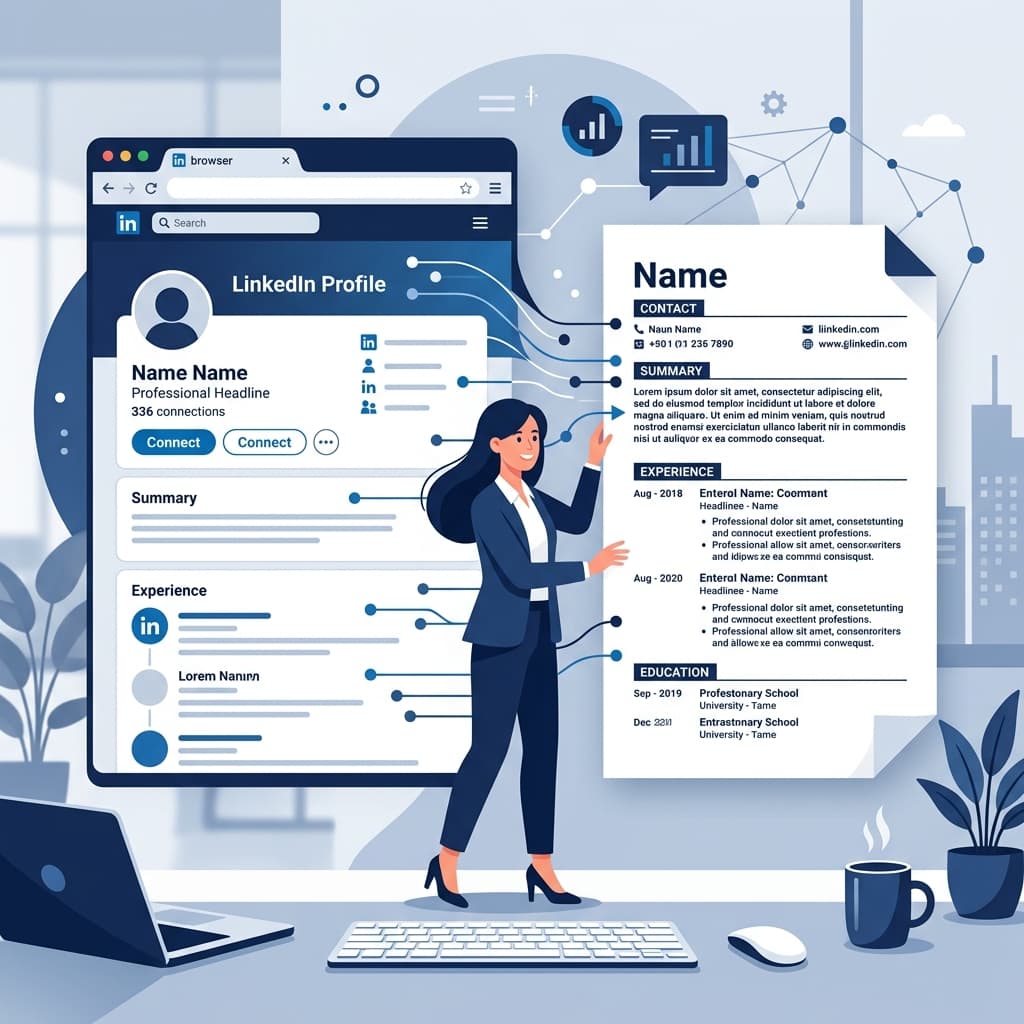
A common mistake job seekers make is treating their LinkedIn profile as a simple copy-and-paste of their resume. While the two should complement each other, they serve entirely different purposes in the hiring pipeline.
The Resume: Targeted and Concise
Your resume is an outbound marketing tool. You send it to a specific company for a specific role. Because it is highly targeted, you should tailor the skills and bullet points to match the exact keywords in the job description.
- Length: Strictly 1 or 2 pages.
- Tone: Formal, third-person implied (no "I" or "my").
- Content: Excludes irrelevant past jobs to save space.
The LinkedIn Profile: Broad and Discoverable
Your LinkedIn profile is an inbound marketing tool. It sits there 24/7 waiting for recruiters to search for you. Because you don't know exactly what a visiting recruiter is looking for, it needs to be broader.
- Length: Infinite. You can list every project, certification, and volunteer role you've ever had.
- Tone: Conversational and professional. First-person ("I am a developer who loves...") is highly encouraged in the About section.
- Content: Includes multimedia (links to portfolios, videos, articles), endorsements, and recommendations.
How to Optimize Both
1. The Headline vs. The Resume Title
On your resume, your title should usually match the job you are applying for (e.g., "Senior Financial Analyst"). On LinkedIn, you should use the 220-character headline to cast a wider net: "Senior Financial Analyst | Corporate Forecasting | Helping SaaS startups scale revenue."
2. The 'About' Section
Your resume's Professional Summary is 3-4 sentences of hard-hitting facts. Your LinkedIn About section can be a compelling 3-paragraph story about why you entered your industry, what you are passionate about, and what you do outside of work.
3. Keyword Density
Recruiters use LinkedIn Recruiter (a premium search tool) to find candidates by searching for specific skills. The more you mention a core skill (like "Python" or "B2B Sales") across your LinkedIn Experience sections, the higher you rank in their search results.
Conclusion
Think of your LinkedIn profile as your master career record and your resume as a highly curated highlight reel. Ensure your job titles and dates match across both to maintain trust, but use the unique features of each platform to their full potential.
Frequently Asked Questions
Should my resume exactly match my LinkedIn?
The dates, titles, and companies must match to pass background checks, but the bullet points should differ. LinkedIn should be a broad overview of your career, while a resume should be highly tailored to the specific job you are applying for.
Can I use first-person ('I') on LinkedIn?
Yes! While you should never use 'I' or 'me' on a formal resume, LinkedIn is a social network. Using first-person in your LinkedIn 'About' section makes you seem more approachable and human.
Ready to land your dream job?
Put these tips into practice immediately. Use our free, ATS-friendly resume builder and professionally designed templates to stand out.